What is "How I run client projects with clear ownership." about?
I would rather tell you something needs three more days than promise speed and spend three weeks managing the fallout.
I would rather tell you something needs three more days than promise speed and spend three weeks managing the fallout.
Dan Heselton, web designer and front-end developer. More at https://danheselton.com/about.

I would rather tell a client something will take three more days than promise speed and spend the next three weeks managing the stress that broken promise creates. Almost every project problem I've cleaned up for someone else traces back to the same root: a vague timeline, vague ownership, and a deck that looked finished before any real decision had been made.
I keep the shape simple on purpose. We agree on the outcome first, map the structure, design against real content instead of lorem ipsum, build in short loops, and write down the decisions that actually matter. No fifty slide discovery deck. No handoff that goes through three people before it reaches the one who can say yes.
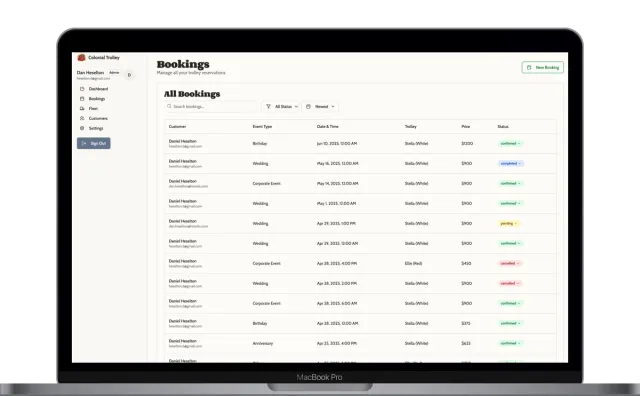
That doesn't mean the work is casual. It means the project has a center of gravity. You know exactly what I'm working on this week, what I need from you to keep moving, and what changed since the last time we talked. I run all of it through one system now, so a client email turns into a task without me losing track of which thread it came from.

I bring in a specialist the moment a project genuinely needs one, whether that's a copywriter, an illustrator, or someone who actually enjoys configuring a CRM. They get a clear scope and a clear deadline. You still get one accountable person at the center of the project, and the work doesn't disappear into a committee where nobody remembers who owns the next step.

If a client ever has to ask, wait, who's doing what, I've already failed at the one job that matters before the design even ships. Everything else is negotiable. That part isn't.

Pick a question below, or ask me anything.